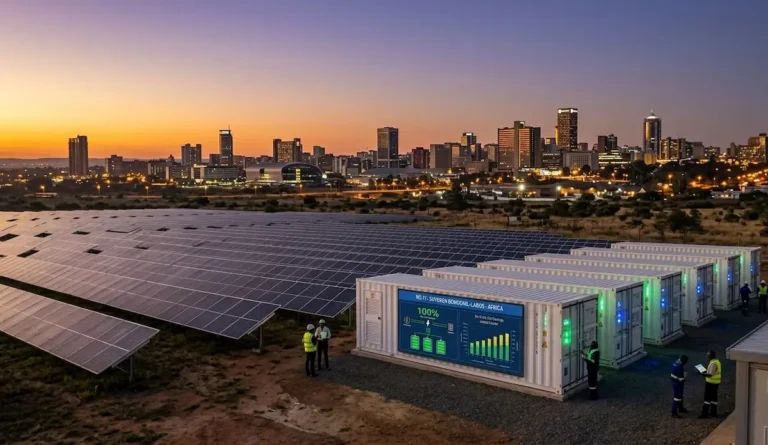
Picture this: a trading shop in Lagos flickers back to life at dusk, not with the cough of a diesel generator, but with a quiet hum stored from the midday sun. This scene, replicated millions of times over, captures the story solar battery storage Africa is writing right now. Across sub-Saharan Africa, darkness after sunset isn’t a metaphor—it’s a logistical vacuum that has swallowed productivity for decades. But a silent pivot is reshaping the continent’s entire energy procurement logic, moving it from a dependency on noisy, expensive fuel deliveries toward a model built on silent electrons and lithium-ion chemistry.
What makes this moment different isn’t a single flagship project or a foreign aid pledge. It’s the math. By the end of 2025, official figures pegged Africa’s solar capacity at 23.4 GW—a 26% yearly leap. Yet the real number tells a much bigger story.
The Hidden Inventory No One Counted
Official tallies miss most of the action. The Africa Solar Industry Association’s 2026 outlook flags a massive blind spot. Since China supplies roughly 90% of global solar panels, analysts have cross-referenced Chinese export data with local records. The gap is staggering. Instead of 23.4 GW, the real installed base across the continent might already exceed 63.9 GW. That’s nearly triple the official figure.
Think about what this hidden capacity means for solar battery storage Africa. Panels mounted on factory roofs in Nairobi. Battery banks wired into telecom towers in rural Tanzania. Small arrays powering irrigation pumps on Senegalese farms. None of these show up in centralized databases, yet collectively they form a parallel grid built by individual purchasing decisions.
If this estimate holds, Africa jumps from under 1% of global solar installations to roughly 2.5% or 3%. The continent shifts in status from an energy-transition spectator to a quiet but active player. The numbers on the ground are already visible in national grids too. Thirteen African nations have pushed solar past 10% of their electricity mix. In the Central African Republic, solar supplies 37.7% of national power. In Chad, the figure sits at 36.7%. Somalia hits 32.4%. This isn’t a token green gesture; these are backbone percentages that keep hospitals, schools, and markets running when other sources fail.
Why Solar Battery Storage Africa Broke the Buying Habit
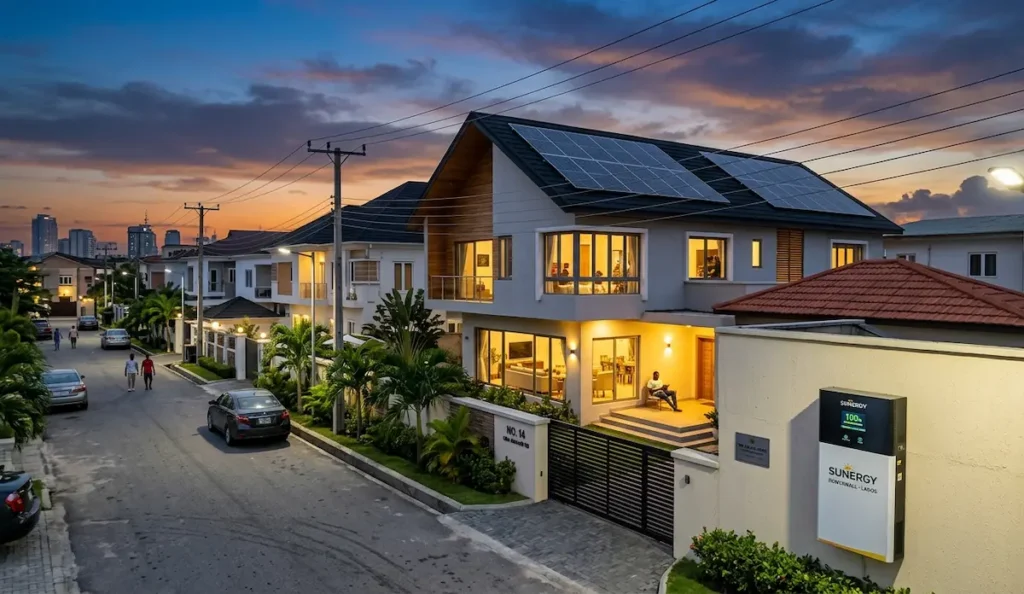
The surge in solar battery storage Africa markets didn’t happen because of a single policy or a sudden burst of environmental consciousness. The shift traces back to three forces that collided at just the right moment.
The first driver is blunt and urgent: electricity for nearly 600 million people remains either absent or maddeningly unreliable. In Nigeria, a major economy, a typical household scrapes by on less than four hours of grid power daily. Businesses budget for diesel deliveries the way restaurants budget for fresh produce—it’s just a line item you can’t escape. This permanent state of energy hunger created a vacuum ready for any alternative that actually works.
Into that vacuum stepped an aggressive cost collapse. The levelized cost of solar paired with battery storage has tumbled to around $76 per megawatt-hour, according to AFSIA’s latest figures. That price point now looks directly at diesel-generated power—and beats it, often by a wide margin, especially in landlocked countries where fuel truck logistics inflate costs.
A mine site in Zambia can slash its energy spend by over 60% by layering solar arrays with containerized battery banks, keeping a smaller diesel genset on standby only for emergencies. Some of those mines already run on over 95% renewable power during daylight charging cycles. When the combined solar-plus-storage system generates a reliable, cost-effective return, procurement managers stop treating solar battery storage Africa as a sustainability checkbox. It becomes what it truly is: the cheaper way to keep operations running.
With the cost barrier crumbling, purchasing channels fractured open. The old model—a government utility issuing a tender for a large power plant—no longer monopolizes the flow of energy investment. A shop owner in Mombasa, a rural health clinic in Uganda, a small cassava-processing facility in Ghana, all now participate as energy buyers.
The New Faces of Energy Procurement
Walk through any off-grid market today, and you’ll spot the variety. Families that could never afford a lump-sum payment for a solar array now access power through pay-as-you-go plans. Companies like M-KOPA and d.light let a household unlock lighting, phone charging, and a fan for a small daily mobile-money payment. You don’t buy a solar battery system; you buy a daily energy service. The asset stays on the roof, and the provider maintains it.
In West Africa, the playbook looks different. Husk Power Systems and Arnergy target small manufacturing clusters and telecom towers. They don’t wait for the national grid to arrive; they build a mini-grid around a set of anchor commercial clients. In Nigeria alone, more than 30,000 households now use solar home systems manufactured by Chinese firms. The purchase often happens through local distributors who bundle the installation with a financing plan. A tailor in Kaduna gets a predictable monthly energy bill instead of a fluctuating fuel cost and a generator breakdown schedule.
Large industrial buyers take yet another route. South Africa’s corporate sector, battered by load-shedding, has invested directly in rooftop and ground-mounted solar battery storage Africa solutions at an unprecedented clip. Tax incentives allowing a 25% deduction on panel costs and accelerated depreciation on assets turned procurement departments into avid solar investors. It’s not uncommon today to see a Johannesburg warehouse roof blanketed in panels, paired with lithium cabinets that discharge during peak evening tariffs.
The Calculator Replacing the Price Tag
A subtle but profound shift has occurred in how African energy buyers evaluate a deal. The sticker price on a solar panel or a battery unit barely tells the real story anymore. The calculation now runs across the entire asset life: procurement cost, installation labor, inverter replacement cycles, battery degradation curves, avoided diesel purchases, and uptime guarantees.
For a factory owner, the driving question isn’t “how much does this solar battery system cost?” It’s “what happens to my production line when the grid trips, and what does the insurance of always-on power cost per year?” That life-cycle view makes the old diesel-only setup look increasingly like a liability rather than an asset. Once a business tastes continuous, silent power from a well-designed solar battery storage Africa installation, the diesel generator starts to feel like a relic—kept in a corner, under a dusty tarp, for rare emergency use only.
China’s Quiet Supply Chain Pivot
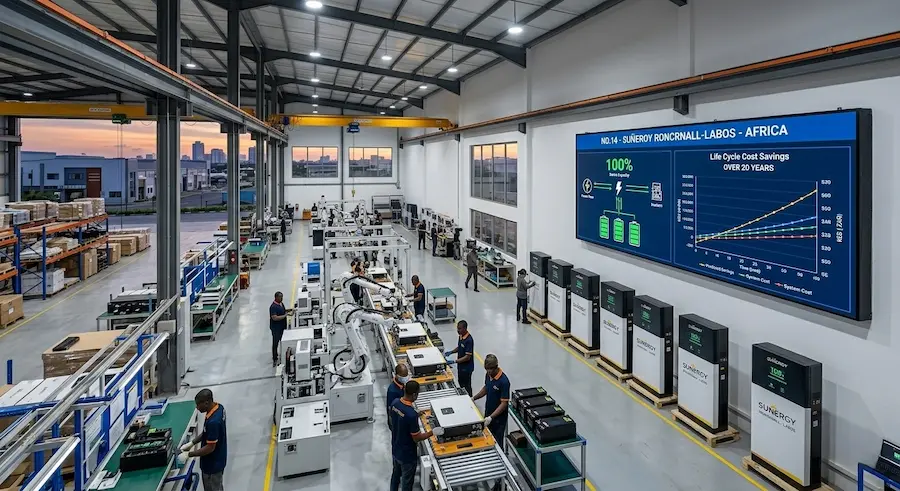
Behind much of this installed hardware stands a supply chain dominated by Chinese manufacturers. Panels priced 30% to 40% below their European or American equivalents have flooded the distribution channels. More importantly, the product designs have evolved. You now find models hardened against fine Saharan dust, tested to maintain output at 50°C ambient temperatures, and paired with inverters tuned for unstable or weak mini-grid signals.
Standardized packaging for household kits—two panels, a compact wall-mounted battery, a charge controller, four LED bulbs—sits on shelves in regional warehouses, ready for the next truck heading to a rural town. The reality is that solar battery storage Africa equipment market is now dominated by Chinese supply, with a share that has topped 75%, built not just on price but on deep adaptation to on-the-ground realities.
Where the Risk Lurks Beneath the Boom
Scaling up solar battery storage Africa this fast invites growing pains. Land acquisition for utility-scale projects in Uganda and elsewhere requires zoning frameworks that rarely exist in clear, enforceable form. Community disputes over land use can freeze a promising site for months. After the hardware arrives and gets installed, a shortage of trained technicians to perform routine maintenance leaves some systems degrading faster than their design life. Then there’s the emerging question no one enjoys discussing: what happens to millions of lithium battery units at the end of their cycling life? Without recycling infrastructure, Africa risks swapping a diesel exhaust problem for a hazardous e-waste problem.
Grid integration poses another structural headache. Utilities lose revenue as commercial clients defect to their own solar-plus-storage systems. The remaining grid customers—often poorer households—risk shouldering the fixed costs of a network they barely benefit from. Regulators haven’t yet mapped a sustainable cost-sharing model for this new reality.
From Imported Fuel to Indigenous Power
Walk through any peri-urban settlement in Kenya or a market town in Sierra Leone at night now, and the sensory landscape has changed. The clatter of generators is fainter. Mobile-money agents stay open later under cool LED light. A cold chain for vaccines hums in the back of a clinic powered by batteries that charged all afternoon. These are not scenes from a development agency report. They are the accumulation of millions of discrete buying choices, each one saying: I’d rather own my power than rent it from a fuel pump.
The drop in storage costs has unlocked something structural. It has handed the procurement decision to the end user—the farmer, the shopkeeper, the mine manager—and given them a tool that pencils out financially. The old narrative had Africa waiting for large dams and interstate transmission lines to arrive. The current reality has communities and businesses building their energy future with modular, scalable solar battery storage Africa hardware that arrives on a truck, not a policy paper.
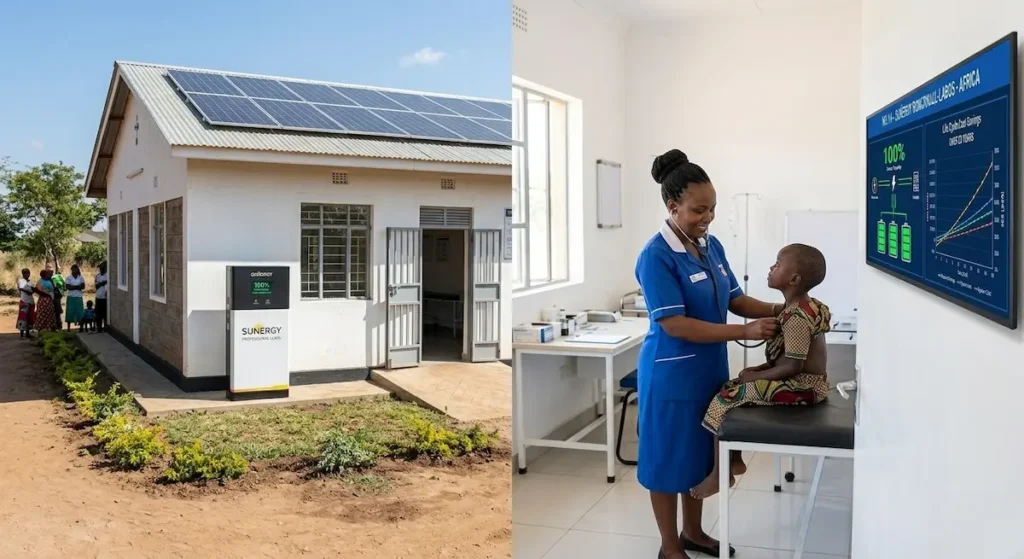
Every battery cabinet humming in a remote trading center is a small declaration. It says reliable power is no longer a distant promise. It’s a product you can buy, install, and use today. The real question for Africa isn’t whether solar and storage work—it’s who gets to access this new architecture of energy independence, and how quickly the rest can join in.