- Prelude: The Real Numbers Nobody Saw Coming
- A Growth Trajectory That’s Becoming the New Normal
- Viewing Africa Solar Energy Trends 2026 Through a Different Lens
- The Twin Engines Defining Africa Solar Energy Trends 2026
- Distributed Solar: No Longer the Understudy
- Storage Steps In, Intermittency Steps Out
- The Manufacturing Pivot: Nigeria Bets Big on Local Production
- The Real Roadblocks Are Financial, Not Technical
- Where the Money Meets the Market: Financing That Actually Works
- What the Road to 2030 Looks Like From Here
Prelude: The Real Numbers Nobody Saw Coming
The Africa Solar Energy Trends 2026 story begins with a number that shattered decades of flawed assumptions. For years, the world sized up Africa’s solar market using official project databases—and got it badly wrong.
The African Solar Industry Association (AFSIA) logged 23.4 GW of operational solar capacity across the continent by late 2025. Solid, respectable, unremarkable.
Then researchers cross-referenced that figure against Chinese customs export data. China supplies roughly 90% of the world’s solar modules. And those records revealed a staggering truth: over 58.1 GW of solar panels had been shipped to African nations since 2017.
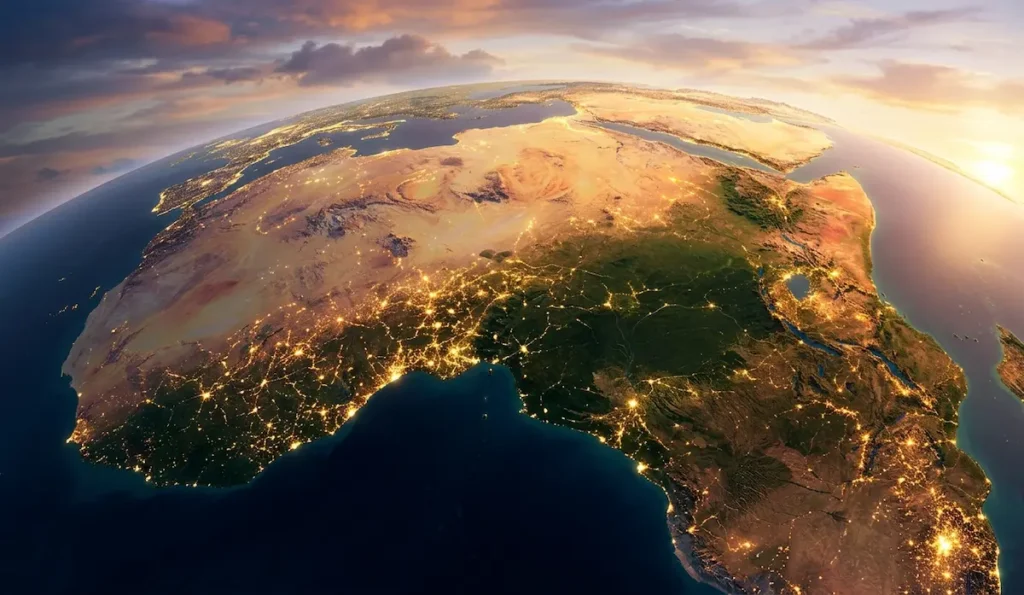
That gap—more than 34 gigawatts—represents a vast, unrecorded universe of rooftop installations, small commercial arrays, off-grid systems, and mini-grids. Millions of individual projects flew completely under the radar, quietly stitching together an energy network that traditional statisticians never saw. This single discovery rewrites everything we thought we knew about Africa solar energy trends heading into 2026 and beyond.
A Growth Trajectory That’s Becoming the New Normal
If 2025 was the year Africa’s solar market roared, 2026 is the year that roar settles into a steady, powerful rhythm.
The raw numbers underpinning today’s Africa Solar Energy Trends 2026 paint a clear picture. Africa added roughly 4.5 GW of new photovoltaic capacity in 2025—a blistering 54% leap from the 3 GW installed in 2024. That momentum carried straight into 2026. The first quarter alone saw nearly 970 MW of new utility-scale solar come online, another quarterly record. Depending on which growth scenario plays out, full-year 2026 additions could land anywhere between 2.8 GW and 14.6 GW.
The real story sits deeper than the topline figures, though. What used to be a one-country show is morphing into something far more democratic.
South Africa still dominates the leaderboard with 1,602 MW of fresh capacity in 2025. Egypt held firm at 500 MW. But Nigeria blindsided everyone—surging to 803 MW of new installations and claiming the number two spot almost overnight. Behind these heavyweights, Algeria, Morocco, Zambia, Botswana, and Tunisia all cracked the “100 MW club” in a single year. The market is spreading its wings, and the depth of the field is finally catching up with the top end.
Viewing Africa Solar Energy Trends 2026 Through a Different Lens
Shifting the metric from total megawatts to watts per person reveals something even more intriguing.
Namibia now leads the entire continent in per-capita solar capacity, leapfrogging the previous champion, Seychelles. South Africa, for all its absolute dominance with over 18 GW identified, settles into third place on this more human measure. The ranking reshuffles the conversation, rewarding countries that have woven solar into daily life rather than just onto national spreadsheets. It’s a quiet reminder that the most meaningful Africa Solar Energy Trends 2026 are as much about distributed inclusion as they are about headline-grabbing totals.
The Twin Engines Defining Africa Solar Energy Trends 2026
Strip away the noise, and the transformation unfolding across the continent runs on two inseparable forces. Distributed generation leads the charge. Battery storage follows right behind, making it stick.
Distributed Solar: No Longer the Understudy
For years, rooftop panels, commercial arrays, and off-grid mini-grids were treated as the scrappy little siblings of the grand utility-scale projects. Those days are over.
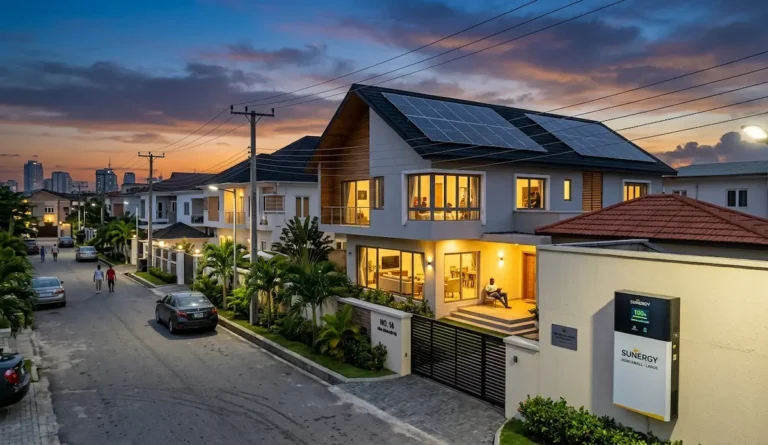
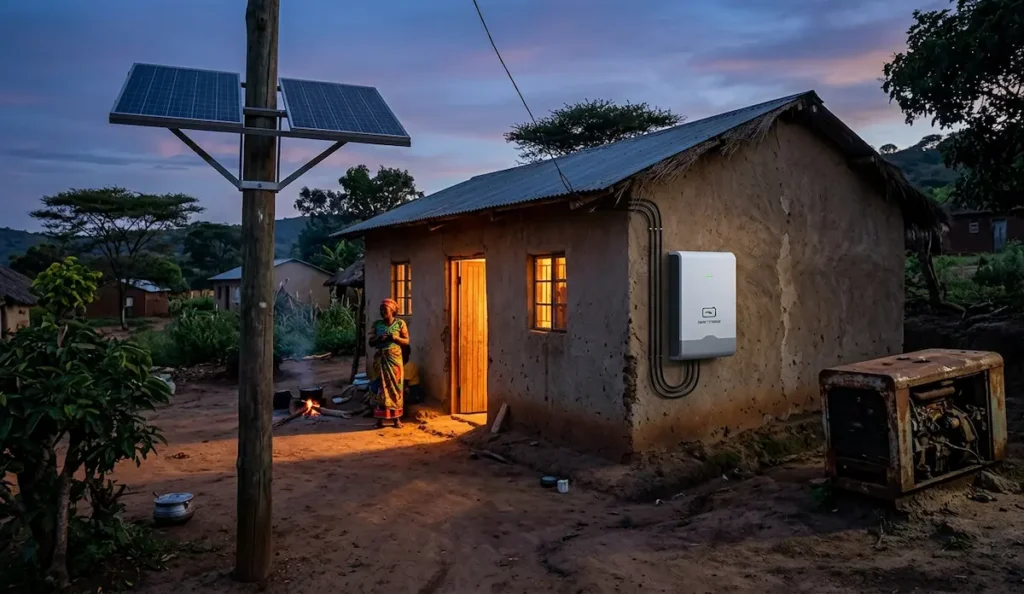
Distributed systems claimed roughly 44% of all new capacity installed in 2025—and the true figure almost certainly runs higher, given how many of those hidden 34 gigawatts live in this category. Nigeria tells the clearest tale: an astonishing 96% of its 2025 additions came from distributed setups. Across Kenya and other nations with patchy grid coverage, distributed solar has become the primary tool for reaching rural communities stubbornly left behind by centralised infrastructure.
A powerful economic signal sits behind the shift. In vast swaths of Africa, generating power from a solar panel has become cheaper than running a diesel generator. That crossover changes household budgets. It changes business calculations. It changes everything. Analysts tracking Africa Solar Energy Trends 2026 have flagged this cost crossover as the single biggest accelerator of distributed adoption.
Storage Steps In, Intermittency Steps Out
None of this works without batteries. The continent’s grids are too fragile, the sun too predictably fickle, to lean on solar alone.
What was an optional add-on just two years ago has hardened into core infrastructure. Battery energy storage systems now hitch themselves to solar projects at every scale. The economics have tipped decisively: solar-plus-storage installations can now compete head-to-head with conventional baseload power on cost.
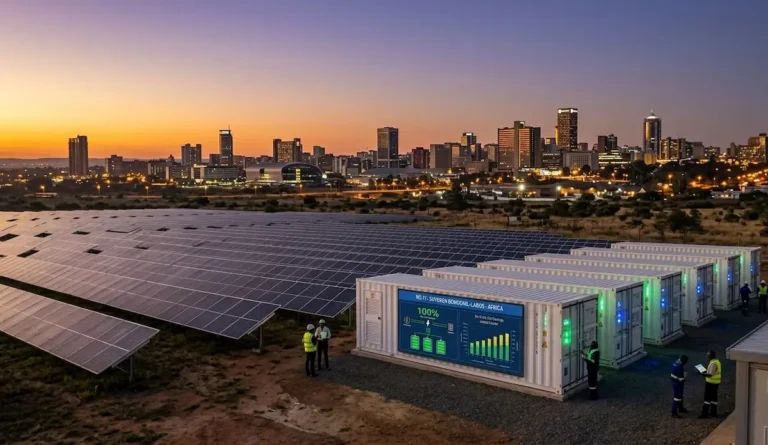
Look at some projects once dismissed as impossible. A 100 MW / 290 MWh installation in Mauritius delivers electricity at an eye-watering levelised cost of just $0.07 per kilowatt-hour. A copper mine in the Democratic Republic of Congo now runs on solar-plus-storage as its baseload supply, not as a green experiment but as a commercial necessity.
By the end of 2026, Africa’s residential storage market alone is expected to approach 10 GWh of installed capacity. That’s not a niche accessory business. That’s a foundational layer of energy security being built one household battery at a time—a defining feature of Africa Solar Energy Trends 2026.
The Manufacturing Pivot: Nigeria Bets Big on Local Production
Something historic is stirring on the supply side. Africa is beginning to build its own solar hardware.
After decades of near-total dependence on Asian imports, several nations are hauling critical parts of the value chain onto home soil. Nigeria has positioned itself at the centre of this industrial push—a shift that many Africa Solar Energy Trends 2026 reports describe as the continent’s most consequential manufacturing gambit. The plans signal serious intent:
A 1 GW solar panel manufacturing facility.
A 1.2 GW module assembly plant.
An 800 MW photovoltaic component factory.
These are not small pilot lines meant for ribbon-cutting ceremonies. They represent a coordinated drive to turn Nigeria into a regional manufacturing hub for West Africa. Zimbabwe has announced its own domestic production ambitions alongside similar stirrings elsewhere on the continent. The shift touches more than energy independence—it hints at Africa carving out an entirely new role within global solar supply chains before the decade closes.
The Real Roadblocks Are Financial, Not Technical
For all the forward momentum, two stubborn barriers still hold the market back. Both trace back to money—how much it costs, and how hard it is to access.
Commercial bank lending rates across many African countries sit stubbornly above 15%. Projects that would be straightforward investments in other parts of the world become unbankable here, strangled by the cost of capital. Industry specialists keep hammering home the same message: for solar to unlock its true potential, developers need single-digit interest rates and leverage ratios above 70%. Only then can delivered electricity prices stay below the crucial 10 US cents per kilowatt-hour threshold that makes projects viable at scale. In any realistic reading of Africa Solar Energy Trends 2026, this capital cost barrier remains the central bottleneck.
Grid infrastructure adds another layer of friction. Much of the continent’s network is aging, underfunded, and ill-prepared for large volumes of intermittent renewable power. Meanwhile, project approval timelines stretching from 18 months to three years sap investor confidence before a single panel gets mounted.
Where the Money Meets the Market: Financing That Actually Works
Ingenuity is starting to punch holes through those walls.
A wave of inventory financing solutions that emerged in 2025 is already compressing the long, painful gap between contract signing and project execution. On a bigger stage, Sun King pulled off a landmark securitisation deal in Kenya—1.56 billion Kenyan shillings, structured by Citi and Stanbic Bank, that bundled the future pay-as-you-go repayments from thousands of solar customers into a tradable asset. Local capital, mobilised at scale, for distributed energy.
Blended finance structures are doing their part too. Public or philanthropic capital absorbs the first-loss risk, giving commercial investors enough cover to step in. Guarantees covering political risk, payment defaults, and currency volatility are becoming more common and more creatively deployed. Piece by piece, the premium that has long priced African solar out of the market is getting chipped away—one of the most encouraging signals embedded in the latest Africa Solar Energy Trends 2026 data.
What the Road to 2030 Looks Like From Here
A few shapes are hardening on the horizon.
The momentum is not fading. Under a mid-range scenario, cumulative new solar additions across Africa could top 31.5 GW by 2029. Optimise the policy and financing environment, and that number doubles. Anyone tracking Africa Solar Energy Trends 2026 over the long term will be watching how quickly these scenarios tilt upward.
Everywhere will mean solar-plus-storage. Homes, businesses, entire communities will adopt the combination as standard practice, not a luxury upgrade. Virtual power plants will knit these distributed assets together, creating decentralised networks that function even when the central grid wobbles.
Mandates are coming. More governments will follow the lead of countries like South Africa, requiring energy storage alongside new solar installations and treating the pairing as essential infrastructure rather than optional enhancement. It’s a regulatory pivot that could fundamentally reshape the equipment market described in Africa Solar Energy Trends 2026.
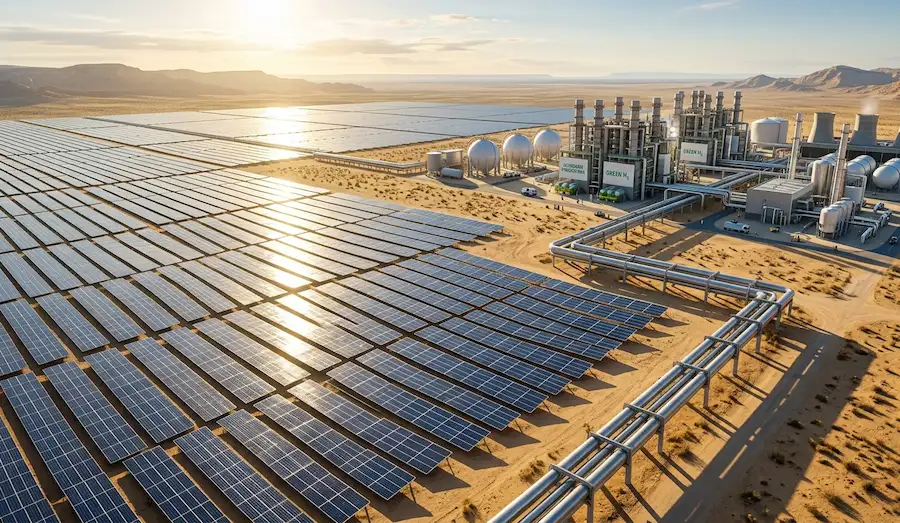
Green hydrogen moves from pilot to pipeline. Mauritania, Namibia, and Egypt are advancing mega-scale solar-to-hydrogen projects measured in tens of gigawatts. Their bet is that Africa’s unparalleled solar resource will one day power the production of green molecules for export markets across the globe.
A continent that spent decades being called the next big thing is finally becoming the current big thing—and it didn’t wait for permission. While the official statistics lagged, millions of households, entrepreneurs, and factory owners simply got on with it, panel by panel, battery by battery. The numbers are finally catching up to the reality on the ground. Whatever the reports say, the real Africa Solar Energy Trends 2026 were already written on rooftops, long before anyone thought to count them.