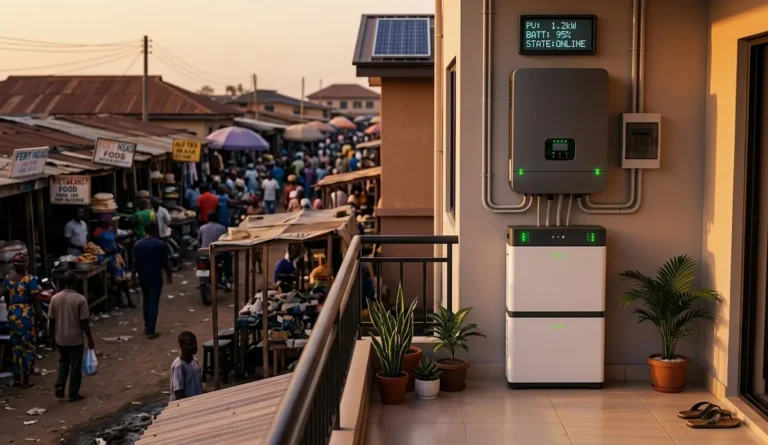
If you’re looking for the real solar panel price in Nigeria 2026, you’re probably watching the quiet shift already happening on rooftops in Lagos, Abuja, and Kano. A fundamental energy flip is underway. For countless homes and businesses, generating your own solar power now costs less per kilowatt-hour than relying on the country’s unstable grid. What used to be an expensive backup plan has turned into a rational, long-term money move. That said, the supply chain is throwing a new curveball — one that’s pushing prices up just as demand gets serious.
Picture this: you’ve finally decided to stop burning cash on generators. You call a few installers to check the solar panel price in Nigeria 2026, and the numbers look slightly higher than what your neighbour paid late last year. You’re not imagining it.
Why the Solar Panel Price in Nigeria 2026 Might Rise 5–15%
Behind the scenes, a policy change is quietly reshaping the market. Starting April 1, 2026, China removed its export tax rebate on photovoltaic modules and started phasing out rebates on battery products. Nigeria’s solar sector leans heavily on Chinese imports, so that decision is translating directly into higher landed costs for panels, inverters, and lithium batteries. Industry estimates suggest that total system costs could rise by 5% to 15% over the next few months. Some quotes you get right now may already include this cushion, while others are about to be updated. The solar panel price in Nigeria 2026 is moving, and locking in a quote early could save you real money.
Solar Panel Price in Nigeria 2026: Cost by System Size
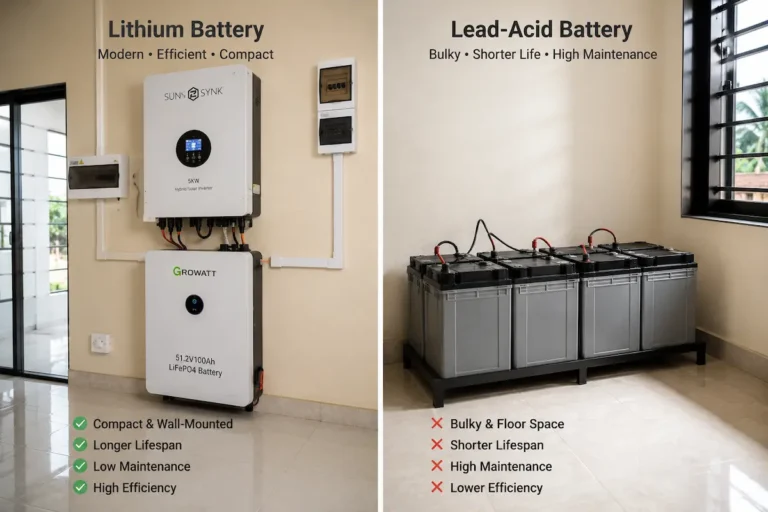
The numbers below blend real market data, import trends, and local installation fees. They come in both naira and US dollars because installers quote both ways. Price ranges stay wide — that’s the reality of shopping across different brands, cell technologies (monocrystalline, TOPCon, HJT), and battery chemistries (lead-acid vs. LiFePO4). Every estimate here assumes lithium iron phosphate (LiFePO4) storage, which has become the mainstream choice.
Small Backup Kits (1kW – 3kW)
Best for a student apartment, a small shop, or anyone tired of nursing a tiny petrol generator just to charge a phone and run a few LED bulbs.
- Total cost: ₦800,000 to ₦2,500,000 (roughly $1,500 – $3,000)
- A typical setup throws together 2–4 panels (say 350W each), a basic 1–2kVA inverter, and a small 1–2.5kWh lithium battery. Some plug-and-play kits with 500Wh hit the market for as little as ₦430,000.
These kits offer the most accessible solar panel price in Nigeria 2026 for anyone starting small and keeping things simple.
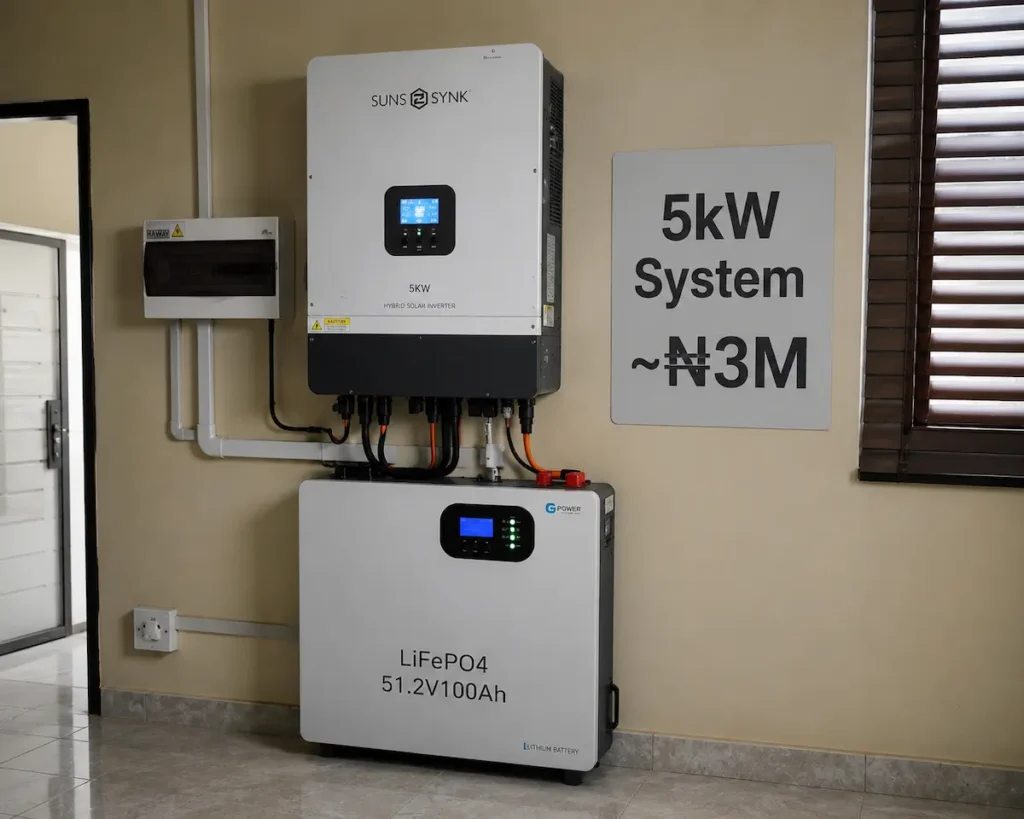
The 5kW Sweet Spot for a Typical Home
This is the system that finally makes a family stop shouting “NEPA has taken light!” every evening. It can shoulder the daytime load of a fridge, TV, several fans, lights, and a washing machine, and still store enough to cushion the night.
- Total cost: ₦2,500,000 to ₦8,000,000 (roughly $2,900 – $8,000). A well-specced 5kW setup usually clusters between ₦2.2m and ₦3.5m.
- Breaking down the dollars:
- Solar panels: $1,500 – $2,000
- Hybrid inverter (5kW): $300 – $500
- Lithium battery (5kWh): $800 – $1,200
- Installation and balance of system: $300 – $500
A lot of families land here after comparing the solar panel price in Nigeria 2026 against twelve months of generator fuel receipts. The maths gets uncomfortable for petrol real fast.
10kW Systems for Larger Homes
Once you add multiple air conditioners, a water pump, and a chest freezer, the 5kW starts sweating. A 10kW rig is the workhorse for bigger households that treat energy independence as a lifestyle, not an experiment.
- Total cost: ₦10,000,000 to ₦50,000,000 (roughly $6,700 – $12,000+)
- Breaking down the core pieces:
- Solar panels: $3,000 – $4,000
- Hybrid inverter (10kW): $600 – $1,000
- Lithium battery (10kWh): $1,600 – $2,400
- Installation and accessories: $500 – $800
- One quality 10kWh lithium battery alone carries a price tag around ₦1,550,000.
15kW for Shops, Clinics, and High-Use Homes
This bracket serves large residences, small offices, community pharmacies, and rural enterprises that used to wake up to the sound of a diesel generator.
- Total cost: Around $10,700 – $16,300
- The dollar breakdown:
- Solar panels: $4,500 – $6,000
- Inverter: $1,000 – $1,500
- Lithium battery (15kWh): $2,400 – $3,600
- Installation and balance of system: $800 – $1,200
20kW and Beyond: Commercial and Community Power
Think factories, cold rooms, telecom towers, or micro-grids serving a cluster of homes. These setups often mesh solar, storage, and a diesel generator into one heartbeat, chasing 100% reliability.
- Total cost: $13,700 to over $20,800
- The battery starts to dominate the bill — a single 20kWh lithium bank can devour $3,200–$4,800 of your budget. Tacking on a backup diesel generator adds another $1,000–$2,000.
When you scan the solar panel price in Nigeria 2026 for a mini-grid, the battery and panel line items will make your eyes widen. But scale kicks in, and the cost per watt actually drops compared to smaller arrays.
Solar Panel Price in Nigeria 2026: Breaking Down Component Costs
Knowing the retail price of individual components helps you smell a fair quote from a padded one. Here’s what’s on shop shelves right now (April 2026) in naira.
Solar photovoltaic panels
- 350W monocrystalline panel: around ₦65,000
- 500W half-cut high-efficiency panel: around ₦88,000
- 650W bifacial panel (catches light from both sides): around ₦110,000
Hybrid inverters
- 4kVA: around ₦350,000
- 6kVA: ₦420,000 – ₦525,000
- 12kVA: around ₦1,130,000
Lithium storage batteries
- 2.5kWh: around ₦355,000
- 5kWh: ₦780,000 – ₦830,000
- 10kWh: around ₦1,550,000
- 15kWh: around ₦1,800,000
Seeing the solar panel price in Nigeria 2026 listed next to battery costs reveals a simple truth: storage is often the priciest piece of the puzzle. That’s why undersizing the battery is the most common mistake first-time buyers make.
Why Solar Still Comes Out Ahead in 2026
The grid keeps getting more expensive and less reliable. A unit from the national grid now sits between ₦220 and ₦270 per kilowatt-hour for many consumers, and that’s when the power is actually flowing. Paying that bill feels like betting on a generator that isn’t yours.
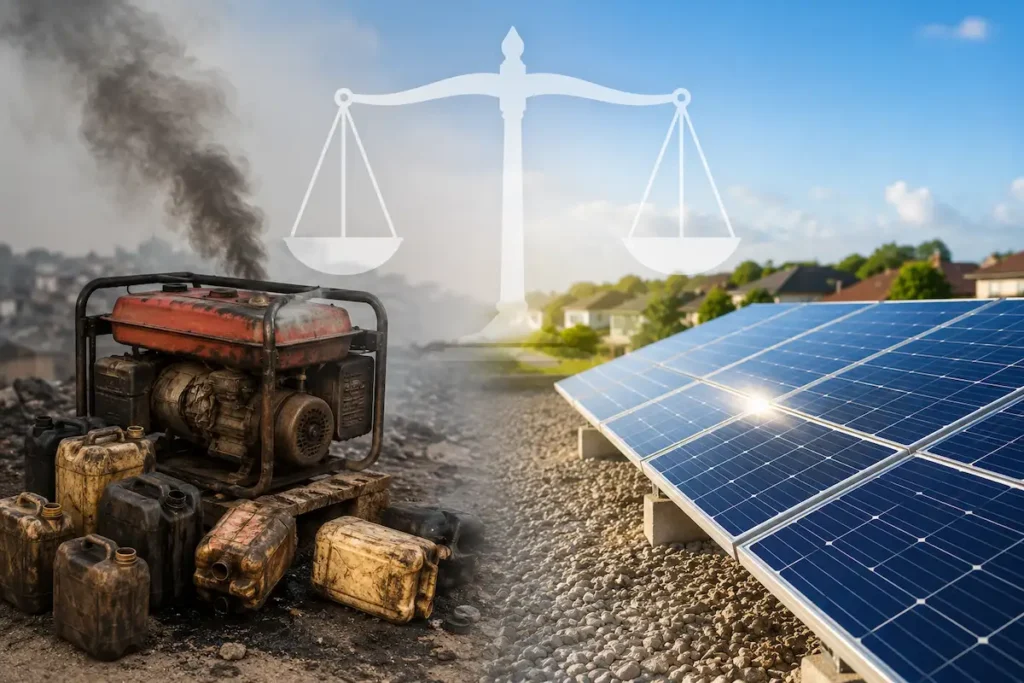
Meanwhile, fuel generators have turned into money-eating monsters. Take a modest 2.5kVA petrol generator running six hours a day. With April 2026 fuel prices, it can swallow ₦335,000 to ₦351,000 monthly — over ₦4 million a year. That’s before you factor in oil changes, spark plugs, and the constant background roar that your family has learned to live with.
A typical 5kW hybrid solar system for a five-bedroom home lands between ₦4.2 million and ₦8.5 million. Most homeowners see a payback window of 3 to 5 years just from skipping generator fuel and grid top-ups. After that, the system keeps humming for two decades or more. Incentives like the new net metering rules — which let you sell surplus power back to the grid — only sweeten the arithmetic.
So when someone asks whether the solar panel price in Nigeria 2026 still makes sense with the recent increases, the fuel receipts and NEPA bills answer louder than any brochure.
How to Lock in the Best Solar Panel Price in Nigeria 2026
Start with your load list, not your wallet. Write down every appliance you refuse to live without and its wattage. Add them up. That number — your total connected load — decides the system size. Guessing always ends in disappointment.
Compare hybrid, off-grid, and on-grid with clear eyes. A hybrid system gives you the best of both worlds in Nigeria: grid backup plus battery autonomy. Off-grid sounds romantic until you realize it demands a much larger battery and usually a standby generator. Pure on-grid systems leave you in the dark the moment the grid yawns.
Nail your supplier and component brands early. Because the solar panel price in Nigeria 2026 may drift further upward after the tax rebate change, try to secure a detailed quote and lock it in. Stick to panels from manufacturers with a proven track record (Jinko and similar names keep showing up for a reason) and pick inverter brands with local service teams. You’re not buying gadgets — you’re buying two decades of your family’s evenings.
Interview at least three reputable local installers. Hand them the same equipment list and make them quote line by line. The cheapest total often hides a battery that will die early or panels that will degrade fast.
Walking away from a flaming diesel drum and towards a silently spinning solar meter isn’t about being green anymore. It’s the most ruthlessly practical spreadsheet you’ll ever build. The solar panel price in Nigeria 2026 might wobble a little with policy shifts, but the price of doing nothing — feeding generators and breathing fumes — keeps climbing. Your roof is already sitting there, waiting for the panels to land. It’s time to let it work.