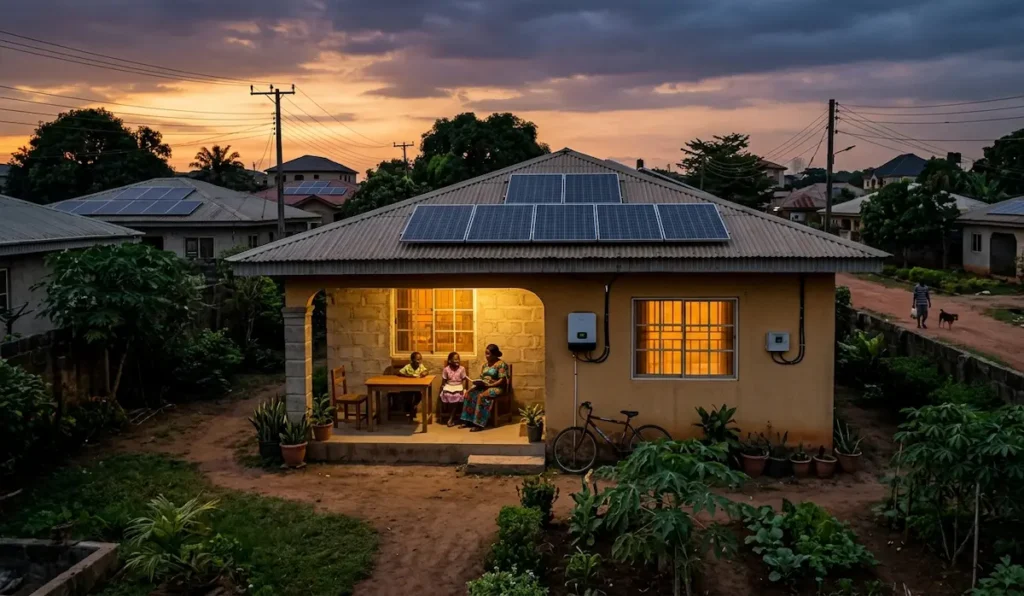
If you’re searching for accurate data on solar generator price in Nigeria 2026, you’ve probably felt the weight of yet another grid collapse, or stared at a stack of fuel receipts that seem to multiply on their own. The question isn’t simply about finding backup power anymore. It’s about working out whether your generator is quietly consuming your entire household budget.
The math has flipped. Solar power systems that once looked like a luxury now beat both the national grid and petrol generators on long-term cost. This guide walks you through the real-world numbers behind the solar generator price in Nigeria 2026, so you can make a clear-eyed decision.
Solar Generator Price in Nigeria 2026: Two Very Different Entry Tickets
Everyone asks about upfront cost first. Fair enough. Fuel generators and solar systems open two completely different doors — one is cheap to unlock, the other builds value that lasts.
Fuel Generators: The Low-Price Trap
Walking into a Lagos market with ₦200,000 in your pocket, a fuel generator feels like the obvious answer. A small “I better pass my neighbour” unit (1–3 kVA) costs between ₦150,000 and ₦400,000. Mid-range models (3–10 kVA) sit between ₦300,000 and ₦1,000,000.
The price tag is gentle. Your first few days with it feel like a win. Power comes on, the lights work, life continues.
That feeling doesn’t last.

Solar Portable Power Stations & Home Systems: An Asset That Pays Back
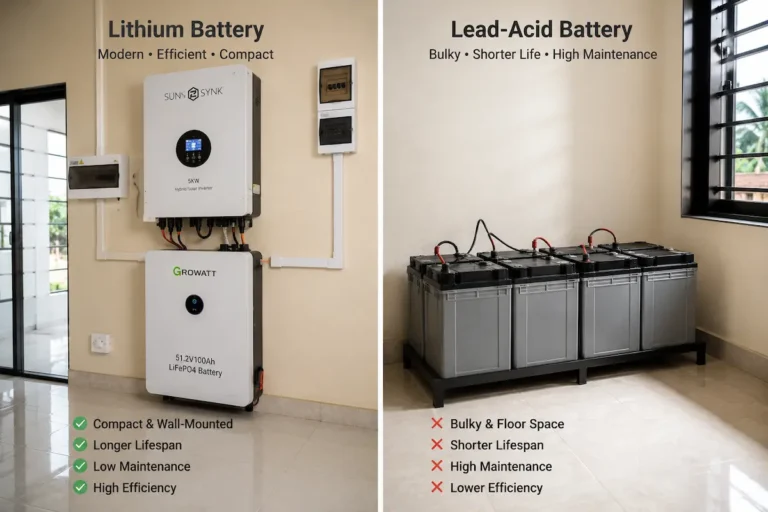
Solar asks for more upfront. That honesty can sting, but the range of options means you don’t have to buy everything at once. The solar generator price in Nigeria 2026 spans from compact emergency kits to full-home installations that cut your dependence on the grid entirely.
| System Tier | Typical Configuration | Price Range (₦) | What It Powers |
|---|---|---|---|
| Entry-Level Portable | 500Wh battery + inverter (no panels) | ₦400,000 – ₦450,000 | Phones, laptops, small fans for 3–5 hours during short outages |
| Budget Portable Power Station | 300Wh–1000Wh all-in-one unit, small panels included | ₦280,000 – ₦950,000 | Lights, TV, laptops for several hours; plug-and-play |
| Mid-Range Home System | 1–5kVA inverter + 2.4–5kWh battery + panels | ₦1,000,000 – ₦5,000,000 | Lighting, fans, TV, refrigerator for 8–12 hours; solid home backup |
| High-End Off-Grid / Hybrid | 10kVA+ inverter + 10kWh+ battery bank + large solar array | ₦10,000,000 – ₦20,000,000+ | Full energy independence; runs AC units, water pumps, 15+ hours off-grid |
Price variation comes down to battery capacity, inverter wattage, and brand. A no-panel starter kit sits at the low end; a complete system with installation sits at the high end. And that’s what makes “solar generator price in Nigeria 2026” a starting point — not the whole story.
Running Costs: Where the Race Gets Embarrassing
Buying the machine is Chapter One. Feeding it every single day is the rest of the book.
Let’s run the numbers for a typical Nigerian household over five years. We’ll compare a mid-range 2.5 kVA fuel generator against a solar home system with an initial investment of about ₦3,000,000. Petrol prices in 2026 are assumed at ₦1,240 to ₦1,400 per litre.
| Cost Factor | Solar System (₦3,000,000 initial) | Fuel Generator (₦250,000 initial) | Notes |
|---|---|---|---|
| Purchase Price | ₦3,000,000 (once) | ₦250,000 (once) | The generator feels like a bargain here. |
| Monthly Fuel Cost | ₦0 | ₦334,800 – ₦351,000 | Based on 6 hours daily runtime, ~1.5L/hour consumption. |
| Annual Fuel Cost | ₦0 | ₦4,000,000 – ₦4,200,000 | This is the number that changes everything. |
| Annual Maintenance | ₦0 – ₦100,000 | ₦50,000 – ₦120,000 | Oil changes, spark plugs, filters — they never stop. |
| 5-Year Operating Cost | ₦0 – ₦500,000 | Over ₦20,250,000 | Fuel and routine maintenance only. |
| 5-Year Total Cost | Around ₦3,400,000 | Around ₦20,500,000+ | The gap is not a typo. |
The generator that felt affordable has, over five years, cost you more than six times the price of the solar system. One real-world case tells the same story more personally. Before switching to solar, a Lagos-based professional burned through roughly ₦300,000 every month on fuel and electricity bills. After installing a 5kVA hybrid system, his semi-annual backup fuel cost dropped to just ₦30,000–₦50,000. Within six months, the savings alone topped ₦1,720,000.
That’s money that stays in your pocket — not vaporized into generator fumes.
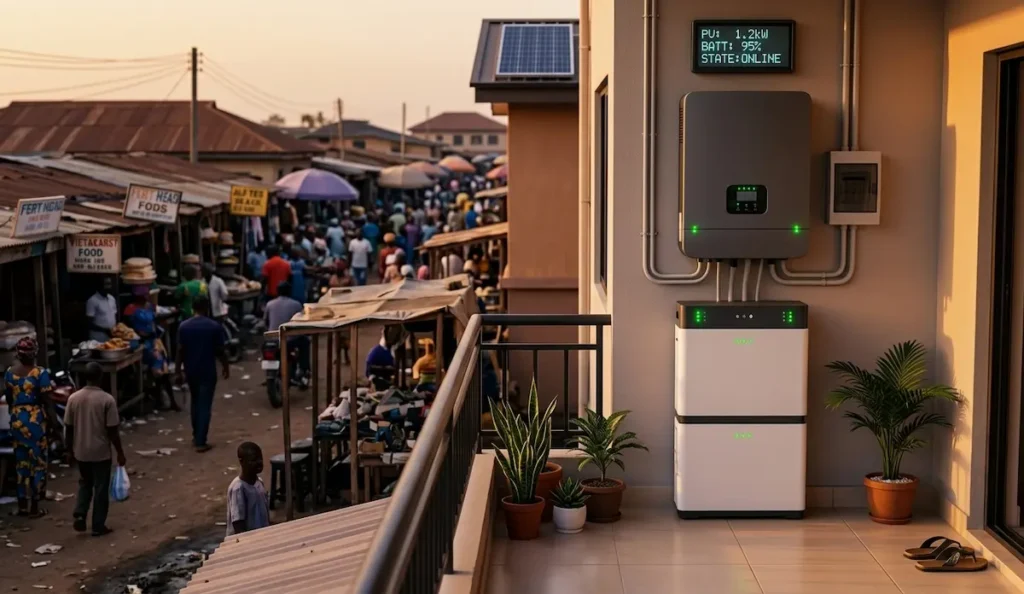
The Benefits Fuel Generators Cannot Match
Numbers nail the argument, but daily life delivers the rest of the proof — and it’s here that the conversation moves far beyond just the solar generator price in Nigeria 2026.
Predictable costs that don’t betray you. Once your solar system is installed, your energy price is locked. No fuel price surge, no subsidy removal panic, no queuing at the petrol station watching the meter tick upward. With grid electricity now averaging ₦220–₦270 per kWh and the supply remaining deeply unreliable, having power you can count on matters more than the tariff itself.
Maintenance that almost doesn’t exist. Solar systems have no engines. There are no moving parts to wear out, no oil to change, no filters to swap. Occasional panel cleaning and a battery health check — that’s about it.
Quiet, clean air for your family. No generator rumble vibrating through the walls. No exhaust fumes seeping into your children’s bedroom. No silent, odourless carbon monoxide risk. Your neighbours might start wondering why your compound is so calm during blackouts.
A real return on investment. Most solar setups pay for themselves within 1 to 3 years. After that, you’re generating almost free electricity for another 20 years or more. This is not just an appliance you buy — it’s a long-term asset installed on your property.
Choosing Your Path Forward
The right choice depends on where you’re standing right now. Be honest about your situation — that honesty saves you money.
Go solar when:
You’re exhausted by fuel costs that rise without warning and want to lock in a predictable energy budget for years to come. Your work, family, or business needs stable, quiet power that doesn’t demand constant attention. You can access flexible payment options — many providers now offer installment plans or lease-to-own models that ease the initial weight.
A fuel generator might bridge the gap when:
Your startup budget is extremely tight, and you experience only short, occasional outages. You must run heavy induction-load equipment — large industrial water pumps or powerful air conditioning units — that your current solar budget cannot support with the required surge capacity.
Start Small, Think Big
You don’t need to buy the complete off-grid system tomorrow. Grab a portable power station in the ₦300,000–₦450,000 range. Use it through the next few grid failures. Feel what it’s like to have silent power while your neighbours’ generators roar. Then, when your finances allow, add panels, expand the battery bank, and grow toward full independence. That first compact purchase is what makes the solar generator price in Nigeria 2026 so accessible — you can start small and still win big over time.
The energy future in Nigeria is no longer a binary choice between the grid and a generator. It’s a hybrid model where solar carries the main load, and everything else plays backup. The numbers have already turned. The only real question left is how many more litres of petrol you’re willing to buy before making the switch.