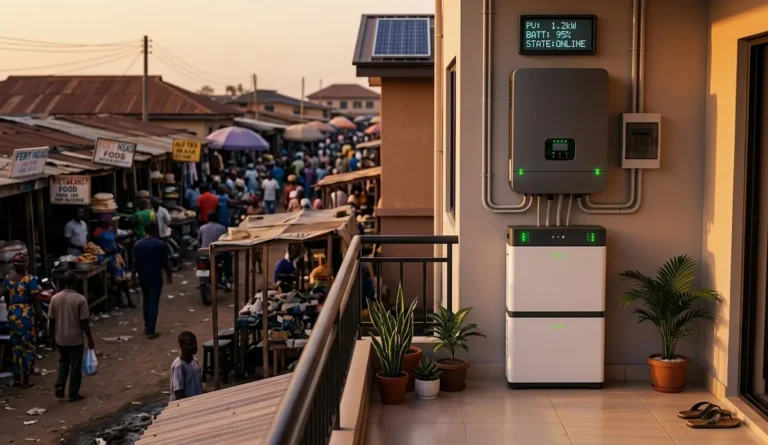
Finding the best solar battery in Nigeria 2026 isn’t just another shopping task. It’s the difference between flipping a switch with confidence and sitting in the dark wondering where your money went. Across Nigeria, over 40% of 2.3 million people still lack stable electricity. The national grid stumbles through a few hours of power each day, and nationwide collapses hit without warning. Diesel generators have filled the gap for years—at a punishing 0.40 to 0.60 dollars per kWh, plus noise you feel in your chest and fumes you can taste. Then the numbers shifted. Solar panel prices cratered by roughly 85% over the last decade. Lithium battery costs dropped closer to 90%.
Today, a standard home solar-plus-storage system in Lagos, Abuja, or Kano delivers electricity at 0.15 to 0.25 dollars per kWh. That math pays you back in 3 to 5 years. By 2025, Nigeria added 803 megawatts of new solar capacity—second in Africa—with distributed home and business projects driving nearly half the surge. The sun is relentless, the policies are lining up, and the battery you pick sits at the center of everything. Choose right, and your home hums with steady power. Choose wrong, and you’re back at the market replacing batteries every few years.
Three battery types dominate the race for the best solar battery in Nigeria 2026: LiFePO₄ lithium, AGM lead-acid, and GEL lead-acid. What separates them? How deep will your pocket need to go? And which one fits your house, shop, or company? This guide breaks it all down—plain, practical, and grounded in what’s actually happening on the ground right now.
- Lithium, AGM, and Gel at a Glance — Picking the Best Solar Battery in Nigeria 2026
- Key Specs — What Defines the Best Solar Battery in Nigeria 2026
- Why Lithium Stands as the Best Solar Battery in Nigeria 2026
- Lithium Brands and Prices — Shopping for the Best Solar Battery in Nigeria 2026
- AGM Batteries: Cheap Entry, Strict Rules
- Gel Batteries: Deep-Cycle Stability With a Fragile Side
- A Three-Step Method to Choose the Best Solar Battery in Nigeria 2026
- Where Each Battery Type Fails
- 2026 Is the Year to Move
Lithium, AGM, and Gel at a Glance — Picking the Best Solar Battery in Nigeria 2026
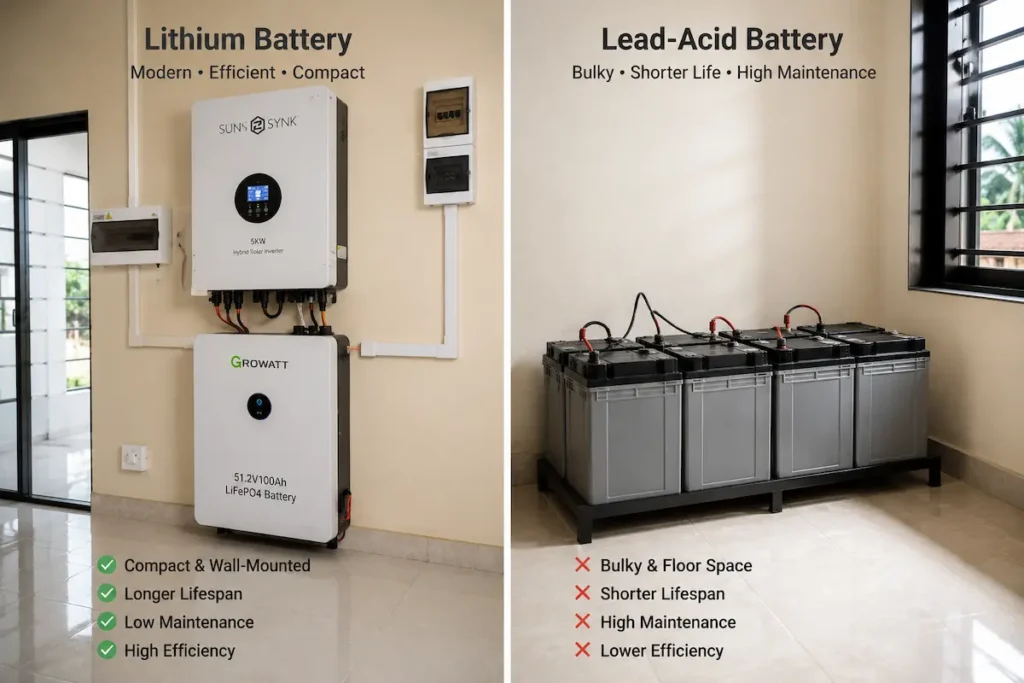
Lithium iron phosphate (LiFePO₄) is the battery most Nigerian installers reach for right now. The energy density leaves lead-acid in the dust. You can drain it nearly empty day after day without tanking its lifespan. It charges in a couple of hours, never asks for water, and stays cool under pressure. Yes, the upfront price stings. But spread that cost over 10 years, and it ends up the cheapest battery you’ll ever own. Heavy daily loads and frequent blackouts? Lithium was built for exactly this.
AGM—short for Absorbent Glass Mat—is the sealed lead-acid workhorse. It’s affordable out of the gate, bolts in easily, and doesn’t need you to top up electrolytes. The trade-off shows up fast: it hates deep discharges, and Nigerian heat cooks its internals quicker than you’d expect. Budget-conscious homes with modest power appetites and disciplined usage habits get the most out of AGM.
Gel batteries trap the electrolyte in a jelly-like silica gel. That design gives them better deep-cycle stamina than AGM, decent heat tolerance, and an almost invisible self-discharge rate. Crack the case, and nothing leaks out—so indoor installation feels safer. But overcharge a gel battery even slightly, and permanent bubbles form inside the gel, stealing capacity you can’t recover. Charging is also slow. If your only grid power window is two or three hours, gel may never reach a full stomach.
Key Specs — What Defines the Best Solar Battery in Nigeria 2026
Numbers tell the story faster than paragraphs. Here’s how the three battery types actually compare based on 2026 Nigerian market products tested in real conditions.
Expected Service Life
Lithium: 10 to 15 years AGM: 3 to 5 years Gel: 4 to 7 years
Cycle Life
Lithium: 4,000 to over 6,000 cycles AGM: 500 to 1,200 cycles Gel: 1,000 to 1,500 cycles
Usable Depth of Discharge
Lithium: 80% to 100% AGM: Keep it under 50% if you want it to last (labels may claim 60–80%, but repeated deep drains slash lifespan fast) Gel: Around 50% for best cycle life
Charging Speed
Lithium: Blazing—full in 2 to 3 hours AGM: Moderate—still needs 8 to 12 hours Gel: Slow—poor match for short charging windows
Heat Performance
Lithium: Chemically stable, high heat tolerance AGM: Heat accelerates internal drying and aging Gel: Better than AGM in heat, but fatally sensitive to overcharging
Maintenance
All three are sealed and maintenance-free in normal operation. Lithium and gel demand the least attention over time.
10-Year Total Cost of Ownership
Lithium: Lowest AGM: Higher Gel: Higher
A quick glance at those rows, and the pattern is hard to miss. Lithium pulls ahead where Nigerian conditions bite hardest—frequent cycling, deep discharges, tight charging windows, and relentless ambient heat.
Why Lithium Stands as the Best Solar Battery in Nigeria 2026
Walk through any solar market in Alaba or browse the top online listings on Jumia, and one trend screams loud: lithium has taken over the conversation. Five reasons explain why it earns the title of best solar battery in Nigeria 2026.
Pay Once, Smile for a Decade
A quality lithium battery lives 10 to 15 years, clocking 4,000 to 6,000 cycles before noticeable degradation. Under Nigeria’s daily charge-and-drain rhythm, it may outlast the inverter it’s connected to. AGM and gel batteries, meanwhile, need replacement every 3 to 7 years. Factor in the cost of buying new units, paying for transport, and wrestling with installation each time, and lithium’s 3- to 4-times-higher sticker price emerges as the bargain. Over a decade, nothing beats it on total cost.
Deep Discharge Without the Guilt
NEPA takes light without sending a memo. Your battery gets drained. With lead-acid, that scenario triggers a slow panic—each deep discharge shaves weeks off its life. Lithium shrugs. You can safely pull 80% or even the full rated capacity, cycle after cycle. A 5 kWh lithium bank often delivers twice the real-world usable energy of a lead-acid bank with the same label rating.
Charge Fast While the Grid Blinks On
PHCN might gift you two or three hours of grid power in an afternoon. Lithium gulps down a near-full charge in that window. AGM and gel barely get past half. That single advantage transforms your relationship with the grid—from frustration to a quick top-up sprint.
Built for the Heat
Lagos midday sun punishes equipment. The lithium iron phosphate chemistry holds stable at temperatures that make lead-acid batteries sweat, swell, and fade. Still, treat any battery with respect: mount it in a shaded, ventilated spot, even if the spec sheet brags about heat tolerance.
Smart Protection Inside
Every reputable lithium battery ships with a Battery Management System—BMS for short. It guards against overcharge, deep discharge, overheating, and short circuits. Lead-acid relies on your external charge controller getting everything right. Lithium has its own watchdog on duty around the clock.
Lithium Brands and Prices — Shopping for the Best Solar Battery in Nigeria 2026
Not every lithium battery is built the same, and the Nigerian market has seen both stellar performers and dangerous fakes. Stick with brands that have proven local support networks.
Top picks installer teams trust in 2026:
DEYE — Market leader with smart BMS, parallel expansion, and relentless high-temperature performance. Often the first name out of an installer’s mouth.
Pylontech — Modular US series stacks like building blocks. Works beautifully with Victron, Growatt, and DEYE inverters.
Blue Carbon — Designed for dusty, hot environments. Rugged casing with long warranty terms.
Felicity Solar — The people’s champion. Their “energy wall” products (5 to 15 kWh) dominate price-conscious segments, and spare parts never feel far away.
Era Solar — Entry-level lithium that drops directly into existing lead-acid setups without swapping inverters. Ideal for small shops testing the lithium waters.
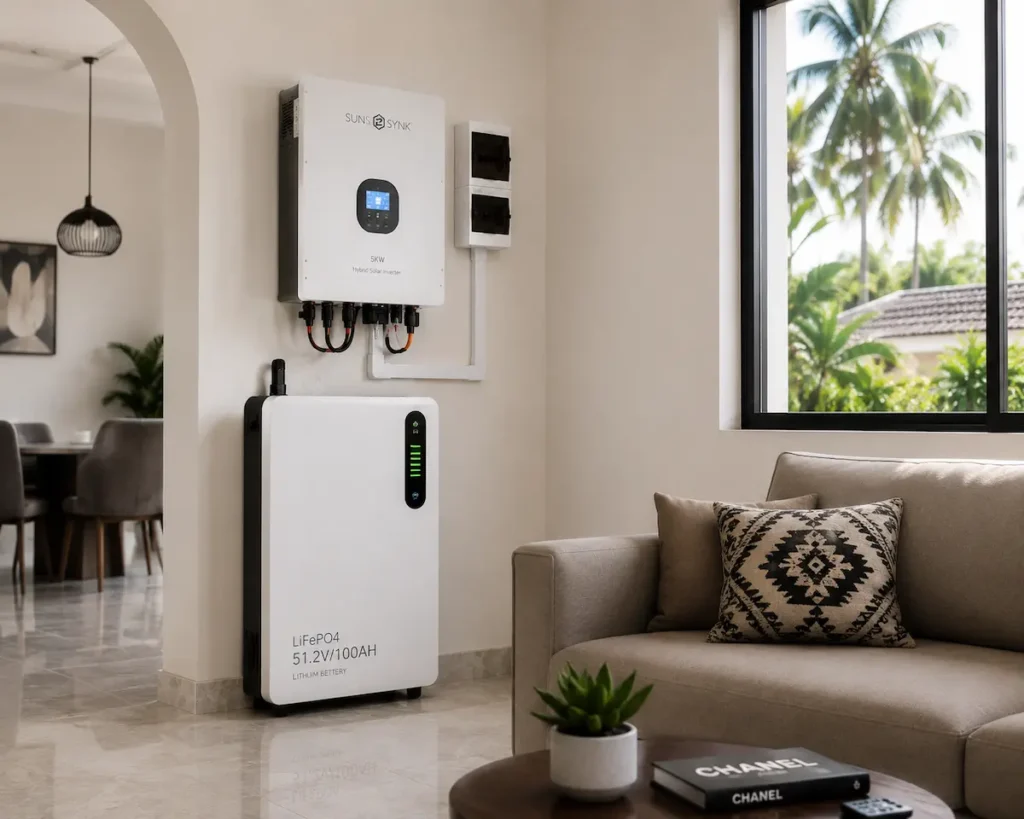
Sunsynk & Growatt — If your inverter already wears the same badge, pairing their batteries unlocks seamless communication and cleaner installs.
Lithium Battery Price Ranges (2026)
– 1.3 kWh (12V): ₦195,000 – ₦250,000 – 2.5 kWh: ₦350,000 – ₦400,000 – 3.8 kWh: ₦500,000 – ₦600,000 – 5 kWh (48V/51.2V): ₦800,000 – ₦1,200,000 – 10 kWh: ₦1,500,000 – ₦2,100,000 – 15–16 kWh: ₦2,600,000 – ₦3,200,000
Prices shift with exchange rates, brand promotions, and distributor margins. Check multiple sources—online platforms, local authorized dealers, and on-the-ground market quotes—before swiping your card.
AGM Batteries: Cheap Entry, Strict Rules
AGM remains a common sight in Nigerian homes, purely because the upfront numbers look gentle. Internal fiberglass mats hold the electrolyte in place, so you can mount it sideways, upside down—doesn’t leak. No water top-ups, ever. Charging is quicker than old flooded batteries, though still glacial next to lithium.
Who benefits most? A household with basic needs—lights, a fan, a modest TV, phone charging—and the self-control to never let the battery voltage nosedive. In regions where blackouts are shorter or less frequent, AGM can serve as a bridge before upgrading to lithium.
The pitfalls hit hard when you ignore them:
Deep discharge is a slow execution. A 100Ah AGM battery realistically gives you 60 to 80 usable amp-hours. Drain it flat repeatedly, and it might not survive a full year.
Heat is enemy number one. Nigerian temperatures steadily evaporate internal moisture, and unlike flooded batteries, AGM offers no way to refill. Mount it somewhere cool and shaded, always.
Overcharging puffs the casing and kills the battery fast. Your charge controller needs precise voltage discipline.
AGM Battery Price Ranges (2026)
– 12V 100Ah: ₦60,000 – ₦120,000 – 12V 200Ah: ₦120,000 – ₦250,000 – Per kWh: approximately ₦120,000 – ₦180,000
AGM Brands Worth Your Naira
– **Trojan** — The global deep-cycle standard. Their solar-dedicated AGM lineup reaches Nigeria through verified distributors like Eauxwell Nigeria Limited. – **Fullriver** — High-quality deep-cycle units sold through certified channels such as Idyllic Technologies.
Gel Batteries: Deep-Cycle Stability With a Fragile Side
The gel electrolyte inside these batteries resists stratification and handles repetitive cycling better than AGM. Self-discharge sits so low that a stored gel battery holds its charge for ages. Crack the outer case, and nothing spills—making it a solid candidate for indoor or living-space installation. Heat tolerance also edges past AGM, which matters in northern Nigeria’s hotter corridors.
Then comes the catch. Gel batteries despise overcharge with an intensity that borders on vengeful. Push the charging voltage just a little too high, and gas bubbles appear permanently inside the gel. That lost capacity never comes back. A charge controller with a dedicated gel setting isn’t optional—it’s a hard requirement. And charging speed still lags. If your electricity access hinges on short PHCN windows, gel’s slow appetite becomes a daily frustration.
Gel Battery Price Ranges (2026)
– 12V 65Ah: ₦85,000 – ₦115,000 – 12V 200Ah: ₦290,000 – ₦400,000 – Per kWh: approximately ₦150,000 – ₦220,000
Gel Brands With Solid Nigerian Presence
– **Mercury** — Widely distributed and battle-tested across countless homes. Their 200Ah deep-cycle gel model has built a loyal following. – **Felicity Solar** — The 200Ah gel battery sells actively on Jumia and Konga with transparent pricing. – **GBM** — Korean-engineered deep-cycle gel battery. The 65Ah unit carries a 10-year design life claim.
A Three-Step Method to Choose the Best Solar Battery in Nigeria 2026
Most buying mistakes happen because someone walks into a shop and asks for “200Ah” without context. Step back. Make the decision methodical.
Step 1: Face Your Budget Honestly
Tight budget between ₦150,000 and ₦400,000? AGM or gel fits here, but mentally prepare for a replacement in 3 to 5 years. At ₦500,000 to ₦1,500,000, entry-level lithium or a larger gel bank opens up. Above ₦1,500,000, go straight to a top-tier lithium battery—DEYE, Pylontech, Blue Carbon. Ten-plus years of not thinking about battery shopping is a luxury worth paying for.
Step 2: Match the Battery to Your Daily Reality
Running a full household—fridge, TV, multiple fans, lights—all day and night? Lithium is the marathon runner that won’t trip. A small store or office with moderate loads can lean on lithium if funds allow, or a quality gel battery paired with a disciplined discharge habit. Large commercial systems with multiple daily charge cycles have only one viable answer: modular lithium. Indoor flats and apartments with limited ventilation get peace of mind from sealed gel or lithium units that emit zero fumes.
Step 3: Crunch Your Energy Numbers Before Swiping
List every appliance. Note the watts. Multiply by hours of daily use. That calculation gives you kilowatt-hours—the real currency of solar storage. The most common buying error in Nigeria is grabbing a single 12V 200Ah battery and expecting it to run a fridge plus lights overnight. Factor in depth-of-discharge limits and inverter losses, and reality lands far below sticker capacity. Match the battery bank size to your calculated daily demand, then add a cushion. Slightly oversizing is smarter than the regret of an undersized system.
Where Each Battery Type Fails
Every battery has a breaking point. Knowing the red flags before you buy can save years of headaches.
Lithium Traps
Too-good-to-be-true prices almost always hide fake cells, inflated capacity labels, or missing BMS protection. Buy only from authorized distributors and verify the warranty. Some older inverters lack lithium communication protocols—check compatibility before pairing.
AGM Traps
Repeated deep discharge kills AGM faster than anything else. Mounting it in direct sunlight or a stuffy corner accelerates internal drying beyond recovery. A sloppy charge controller with voltage spikes leads to swollen cases and permanent death.
Gel Traps
Overcharge is a gel battery’s executioner. Even a small voltage overshoot creates permanent gas pockets inside the gel matrix. Set the controller to gel mode, period. Don’t expect a full charge in a one-hour grid window. In hotter northern regions, shade and airflow still determine how many years you get.
2026 Is the Year to Move
The policy winds are blowing in the right direction. Nigeria scrapped import duties on all core renewable energy equipment from early 2026. Solar panels that used to carry 20% tariffs now enter at zero. Solar batteries enjoy VAT exemption. The government’s 750 million dollar solar initiative is rolling out roughly 1,350 mini-grids, while the World Bank and African Development Bank have unlocked hundreds of millions in low-interest credit for off-grid solar and storage projects.
Global lithium battery costs continue their long decline, though China’s phased reduction of export tax rebates—battery products dropped from 9% to 6%, heading to zero by 2027—may cause small price ripples on imported units. On the positive side, Nigeria’s domestic solar panel assembly capacity has climbed from 120 MW to 300 MW in two years. Local production growth helps stabilize pricing and improves after-sales support over the medium term.
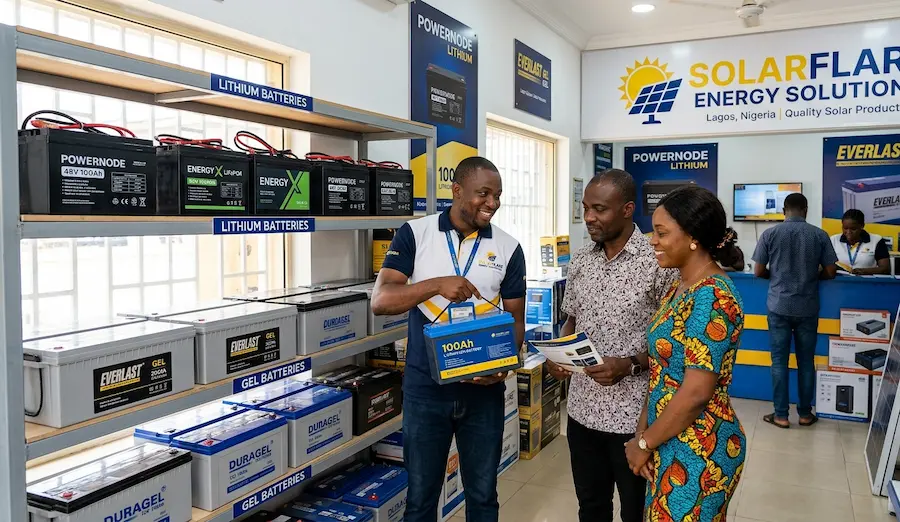
Where to find your battery? Authorized dealers for DEYE, Pylontech, Trojan, and other major brands operate verified distribution networks with installation and warranty backing. Online platforms like Jumia and Konga simplify price comparison—just stick to official stores and demand a proper receipt and warranty card.
For those who want to touch the hardware and negotiate face-to-face, two major exhibitions hit Lagos in 2026: the Solar & Storage LIVE Nigeria show on July 14–15, and the Nigeria New Energy & Power Industry Expo on September 16–18, both at the Landmark Centre. Walking the exhibition floor, shaking hands with distributors, and seeing battery systems powered up beats months of online research. Alaba International Market and similar wholesale hubs offer variety and aggressive pricing, though the waters run deep—best navigated by experienced buyers who know how to spot genuine stock.
Every naira you spend on a solar battery in Nigeria today is a bet on something bigger than backup power. Lithium gives you a decade of near-invisible ownership with the lowest long-term cost and the fastest charging your grid window can support. Gel delivers stable deep-cycle performance for those with moderate budgets and strict overcharge discipline. AGM stays as the accessible first step, useful when the load is light and the usage is gentle. Do the arithmetic, choose a battery that fits your actual daily rhythm, and that fierce Nigerian sun over your rooftop will finally start working a full 24-hour shift for you.